

Introduction
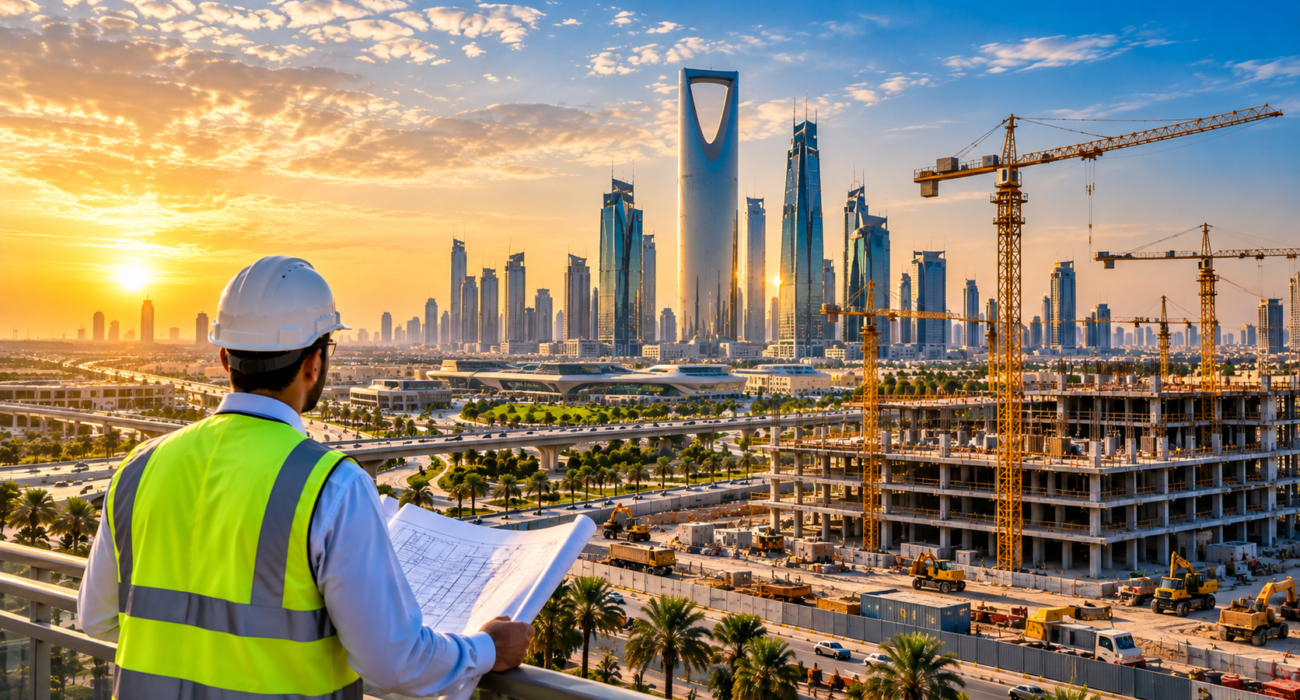
Saudi Arabia is undergoing a remarkable transformation across infrastructure, construction, industrial development and urban environments. Large-scale development programs, expanding cities and increasing investment in infrastructure are creating new opportunities for engineering, contracting and project management companies.
The construction industry is no longer focused simply on completing buildings and infrastructure. Modern projects require a combination of technical expertise, efficient planning, digital tools, safety management, sustainability and strong stakeholder coordination. Companies that can bring these capabilities together are better positioned to support clients through increasingly complex projects.
As the Kingdom continues to develop its cities, transportation networks, industrial facilities and supporting infrastructure, construction will remain a fundamental part of its economic and social development. The future will depend not only on how much is built, but also on how efficiently, safely and sustainably projects are delivered.
A Changing Construction Landscape
The Kingdom’s development agenda is encouraging the construction sector to adopt new approaches to project delivery. Projects are becoming more interconnected, and clients increasingly expect greater visibility over schedules, costs, quality and performance.
This creates a need for structured project management from the earliest stages. Clear objectives, realistic schedules, resource planning and effective risk management can help reduce uncertainty and improve delivery.
Construction companies are also working in an environment where expectations are changing rapidly. Clients want reliable partners who can understand project requirements, coordinate different stakeholders and respond effectively to technical and operational challenges.
Technology and Digital Transformation
Technology is becoming an important part of modern construction. Digital project management platforms, engineering software, building information models, data analytics and remote collaboration tools can improve communication and provide project teams with better information.
Digital tools are particularly valuable when multiple contractors, consultants and suppliers are involved. Centralized information can make it easier to track progress, identify delays, coordinate technical decisions and maintain project documentation.
Artificial intelligence and data-driven tools are also beginning to influence the way construction organizations plan and manage projects. Used appropriately, these technologies can support forecasting, reporting, document management and decision-making while allowing project teams to focus more attention on complex issues.
Sustainability and Efficiency
Sustainability is becoming increasingly important across the construction sector. Efficient design, responsible material selection, reduced waste and improved resource management can contribute to better long-term project performance.
Modern projects need to consider their full lifecycle. Decisions made during design and construction can influence operating costs, maintenance requirements, energy consumption and environmental performance for many years.
Improving efficiency does not necessarily mean reducing quality. Instead, it means applying engineering knowledge and better planning to achieve the required performance while using resources responsibly.
Infrastructure and Industrial Development
Saudi Arabia’s expanding infrastructure is creating demand across multiple areas, including transportation, utilities, industrial facilities, logistics, urban development and supporting services.
Infrastructure projects often require strong coordination because they involve multiple disciplines and stakeholders. Engineering, procurement, construction, safety and project management activities must work together to maintain progress.
Industrial development also requires reliable technical solutions and disciplined execution. As new facilities are developed and existing assets are improved, companies with strong engineering and project delivery capabilities can play an important supporting role.
The Importance of Skilled Project Teams
Technology alone cannot deliver successful projects. Experienced engineers, project managers, supervisors and site teams remain essential.
Construction projects involve decisions that require practical judgement, communication and collaboration. Skilled professionals help identify problems, coordinate resources and adapt plans when site conditions or project priorities change.
Continuous learning is also becoming increasingly important. As technologies, standards and project requirements evolve, engineering and construction professionals need to maintain their technical knowledge and develop new capabilities.
Safety as a Foundation for Growth
Safety must remain a fundamental part of construction and engineering. As projects become larger and more complex, effective safety management becomes even more important.
Risk assessment, training, site supervision, clear procedures and continuous communication can help organizations create safer working environments. Safety should be integrated into planning and execution rather than treated as an activity separate from project delivery.
A strong safety culture also supports project performance. When teams work safely and systematically, organizations can reduce disruption, improve quality and create greater confidence among clients and stakeholders.
The Role of Innovation
Innovation will continue to shape the future of construction in Saudi Arabia. New materials, digital platforms, automation, advanced engineering methods and improved project management practices can create opportunities to deliver projects more efficiently.
Innovation should always be connected to a practical objective. The most valuable technologies are those that solve real problems, improve safety, reduce waste, enhance quality or create better visibility for decision-makers.
For construction companies, the ability to adopt useful innovation while maintaining strong execution standards will be an important competitive advantage.
How SPK KSA Contributes
At SPK KSA, we believe successful project delivery begins with understanding the client’s objectives and translating them into practical, reliable solutions.
Our approach combines engineering knowledge, project coordination and disciplined execution. We recognize the importance of quality, safety, efficiency and clear communication throughout the project lifecycle.
As Saudi Arabia continues its development journey, we aim to support clients with professional engineering, contracting and project management solutions that respond to the needs of a changing market.
Our objective is not simply to complete projects. It is to contribute to reliable outcomes, strong partnerships and a better-built future for the Kingdom.
Looking Ahead
The future of construction in Saudi Arabia presents significant opportunities. As cities expand, infrastructure develops and industrial capabilities grow, the sector will continue to evolve.
The next generation of projects will require organizations that are adaptable, technically capable and committed to responsible delivery. Successful companies will combine people, technology, engineering expertise and effective management to create lasting value.
SPK KSA remains committed to contributing to this progress through professional engineering, contracting and project management solutions, with a focus on quality, safety, reliability and long-term client value.